
Three jurors from the Lindsay Clancy triple-murder trial have spoken publicly about the tense deliberations that ultimately ended without a verdict, revealing how deeply divided the panel became over whether the Massachusetts mother should be held criminally responsible for the deaths of her three children. In an interview with NBC10 Boston, jurors Roni Carlson, Kellie Farina and Paula Devlin described a deliberation process that lasted more than 38 hours and included repeated disagreements over the legal standard of reasonable doubt. According to the jurors, the panel appeared to be moving toward a verdict of not guilty by reason of insanity, but one male juror remained opposed to that conclusion. Carlson, the jury foreperson, said the holdout juror acknowledged that he had reasonable doubt but nevertheless refused to support a verdict finding Clancy not criminally responsible. She recalled becoming so confident that the jury was close to reaching an agreement that she began completing the required verdict forms. The case ultimately ended in a mistrial after jurors told the court they could not reach a unanimous decision. The jury consisted of nine women and three men, and court notes indicated that the panel was divided 11 to 1 at one point during the deliberations. The disagreement highlighted the difficult question at the center of the case: whether Clancy understood the difference between right and wrong when she killed her children.
Clancy, 36, acknowledged killing her three children at the family’s home in Duxbury, Massachusetts, in January 2023. The central issue at trial was not whether she caused their deaths, but whether severe mental illness prevented her from being legally responsible for her actions. Her defense argued that she was experiencing postpartum psychosis and an extreme psychiatric condition when the killings occurred and that she later attempted to take her own life. Prosecutors and defense attorneys presented evidence concerning her mental state, medical history, behavior and circumstances surrounding the tragedy. During deliberations, jurors were required to consider the evidence under Massachusetts law and determine whether Clancy had the mental capacity necessary for criminal responsibility. Carlson said the jurors were not debating whether Clancy had killed her children because that fact was established. Instead, they were focused on whether she understood right from wrong at the time. She said evidence presented during the trial, including personal writings and testimony from members of Clancy’s family, convinced some jurors that Clancy had a strong bond with her children before the killings. For those jurors, the evidence raised significant questions about what happened to her mental state before the deaths. The disagreement illustrates why insanity defenses can become among the most complicated issues in criminal trials, requiring jurors to separate the emotional reality of a crime from the precise legal standards governing responsibility. While the defense sought to establish that Clancy’s psychiatric condition affected her ability to understand her actions, the opposing view focused on whether the evidence met the demanding legal threshold required for a verdict of not guilty by reason of insanity.
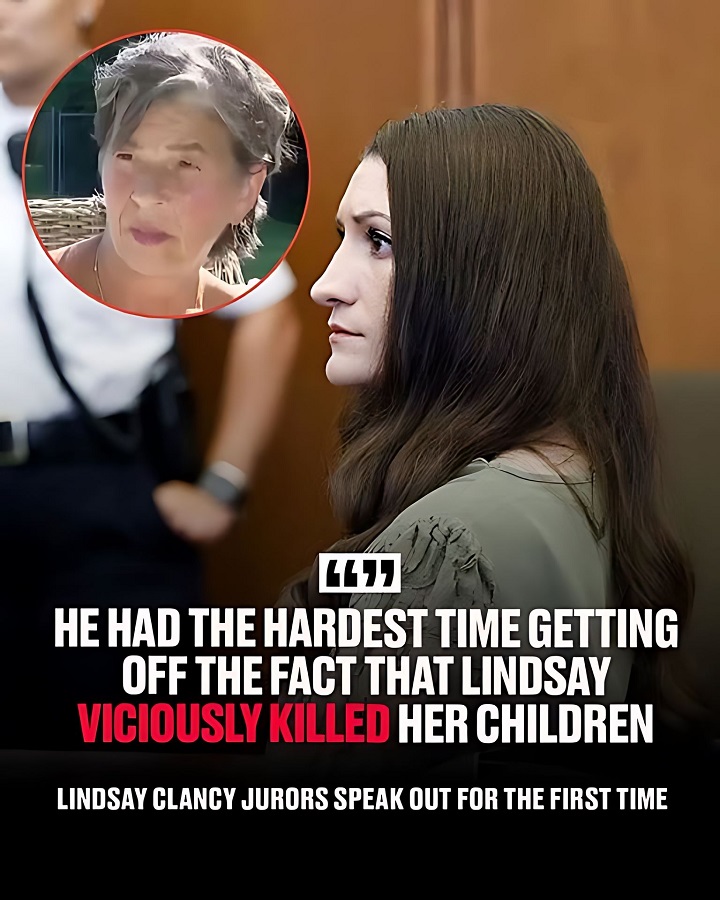
The jurors also described the emotional strain of the lengthy deliberations. Farina said the holdout juror had particular difficulty moving beyond the fact that Clancy had killed her children. According to her account, members of the panel repeatedly referred to the judge’s instructions concerning reasonable doubt as they attempted to explain how the legal standard should be applied. The jurors said frustration eventually became overwhelming, with members sometimes standing and walking around the jury room because of the intensity and length of the discussions. Devlin characterized the holdout juror as unwilling to accept information presented by other members of the panel, including observations from jurors with nursing backgrounds concerning evidence related to Clancy’s toxicology results. Such disagreements became central to the inability of the jury to reach a unanimous verdict. Farina also described hearing a 911 call made by Clancy’s husband, Patrick, as one of the most emotionally difficult moments of the case. The recording, which was not publicly broadcast beyond the courtroom, reportedly left jurors deeply affected. Some jurors used headphones when the recording was replayed because they did not want to hear it again. The emotional impact of the evidence demonstrates the extraordinary burden placed on jurors in cases involving children, mental illness and alleged homicide. Although jurors are instructed to base their decisions on evidence and the law rather than emotion, the testimony and recordings presented during a case of this magnitude can make deliberations especially difficult.
The mistrial means the jury did not reach the unanimous verdict required to resolve the criminal case, leaving the legal proceedings without a final determination from that panel. The interviews with Carlson, Farina and Devlin provide an unusual glimpse into what happened during deliberations, although the account represents the views of three jurors and not the entire panel. NBC10 Boston reported that it attempted to contact the juror who reportedly remained opposed to the proposed verdict for comment. His perspective could provide additional context about why he believed the evidence did not justify a finding of not guilty by reason of insanity. The case also highlights broader questions surrounding criminal responsibility, postpartum mental illness, forensic psychiatry and the legal standards used when serious crimes intersect with severe psychiatric disorders. For families, legal professionals and mental-health experts, the proceedings have become an important example of how difficult it can be to determine responsibility when a defendant’s mental condition is a central issue. The mistrial does not itself establish that Clancy was legally innocent or guilty; it means the jury was unable to reach the required unanimous verdict. Any future proceedings will depend on decisions by the court and the parties involved. For now, the jurors’ accounts offer a rare look at the intense disagreement that prevented the trial from reaching a final verdict and underscore the challenges of applying the law in one of Massachusetts’ most closely watched criminal cases.